
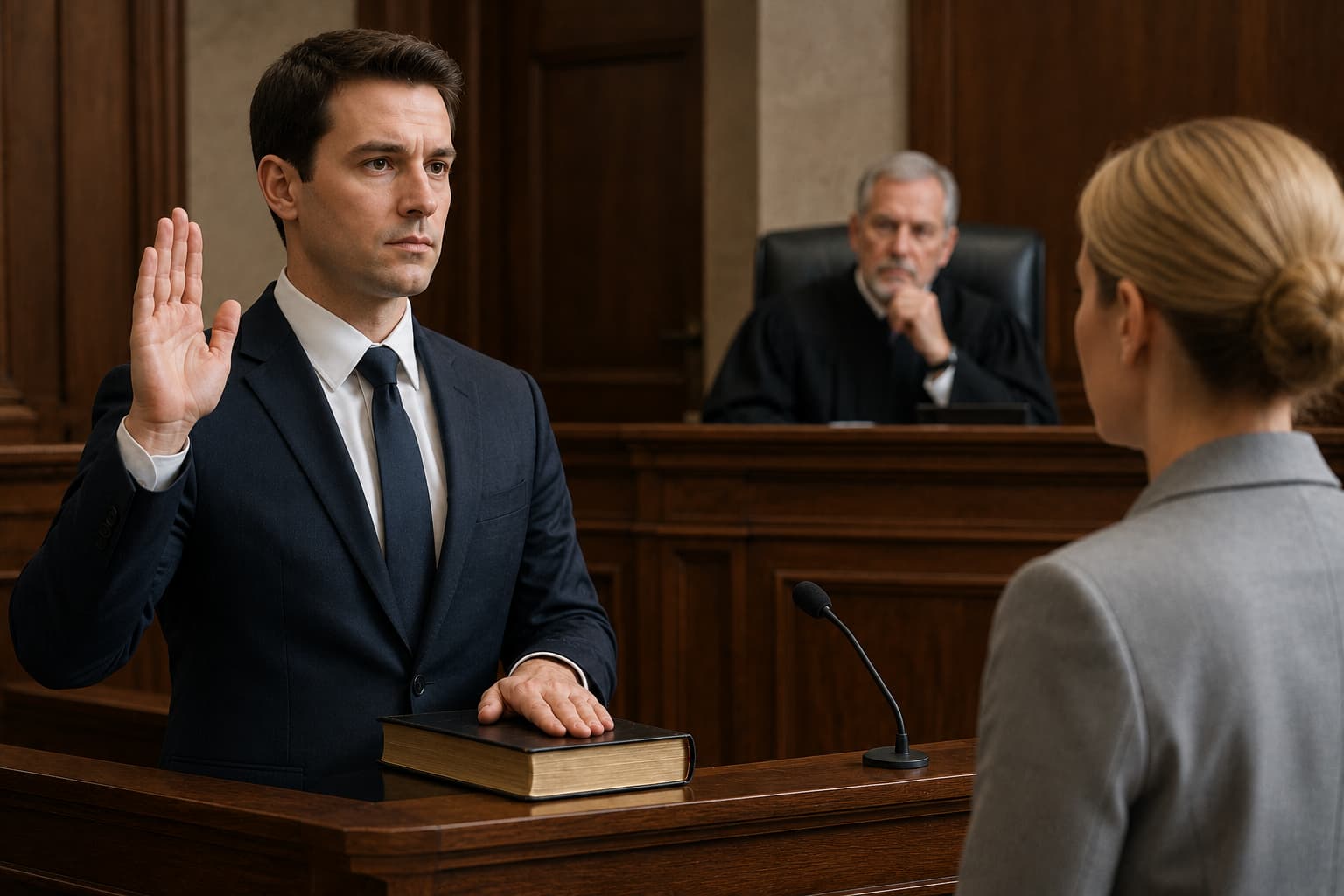
Everyone knows the scene from countless films and television dramas. A witness steps up to the stand, places one hand on a Bible, raises the other, and swears to tell the truth, the whole truth, and nothing but the truth, so help me God. It is one of the most recognizable rituals in all of law, so iconic that most people assume the Bible itself is doing something legally important, that the sacred book somehow binds the witness to honesty. The surprising reality, which every law student eventually learns, is that the Bible in that moment is doing almost no legal work at all. The book is theater. What actually compels the truth is something else entirely, and understanding that gap reveals a great deal about how the legal system really operates.
Start with the fact that surprises people most: you do not have to swear on the Bible, or invoke God, or hold any holy book whatsoever, and choosing not to costs you nothing in legal terms. Every court that uses the religious oath also offers a secular alternative called an affirmation. Instead of swearing before God, the witness solemnly and sincerely declares and affirms that their evidence will be the truth. This option exists for atheists, for members of religions that forbid oath-taking, and for anyone who simply objects to mixing faith into a courtroom. And here is the crucial point: the affirmation carries exactly the same legal weight as the oath. Not a lesser version, not a diminished commitment, but an identical one. A witness who affirms is bound precisely as tightly as one who places a hand on scripture. If the sacred text made any real legal difference, this could not possibly be true.
So if the Bible is not what binds the witness, what does? The answer is a decidedly earthly mechanism: the crime of perjury. The moment a witness takes the stand under oath or affirmation, they become legally exposed to criminal prosecution if they knowingly lie. Perjury is a serious offense that can carry heavy fines and imprisonment. This, and not any fear of divine judgment, is the real machinery that pressures a witness toward honesty. The oath is the legal trigger that switches on this liability, but the source of its power is the statute book and the threat of a prison cell, not the holy book under the witness’s palm. Swearing on the Bible and affirming secularly both flip the same switch. What follows is a matter for the state, not for heaven.
This becomes even clearer when you look at what the law actually requires of the ritual. The rules of evidence that govern courtrooms do not mandate a Bible, a deity, or any particular words. They require only that the witness make some affirmative commitment in a form designed to impress upon their conscience the duty to tell the truth. That is the entire legal requirement. The form is deliberately flexible precisely because the specific religious content is not what matters. A judge cannot waive the requirement of an oath or affirmation entirely, because some solemn commitment is essential, but the judge has wide latitude over how it is expressed. The commitment is the point. The Bible is merely one traditional vehicle for delivering it.
Nowhere is this flexibility more visible than in how courts handle child witnesses. A young child cannot be expected to grasp the theological weight of swearing before God, and reciting a formal oath to them may be, as one court put it, essentially meaningless. So instead of insisting on the ritual, judges often simply question the child to establish that they understand the difference between a truth and a lie and know they must be honest. If the child demonstrates that basic understanding, their testimony can proceed. The law, in other words, is perfectly willing to discard the traditional oath entirely when it does not serve its actual purpose, which is securing a genuine recognition of the duty to be truthful. That would be unthinkable if the sacred ceremony itself held the legal power.
None of this is to say the oath is pointless or that the Bible is a silly relic. The ritual endures for reasons that are real, even if they are psychological and cultural rather than strictly legal. For a religious witness, swearing before God may genuinely deepen their sense of obligation, and the law respects that. More broadly, the solemnity of the ceremony serves a purpose all its own. Standing up, raising a hand, and speaking a formal vow marks a clear psychological threshold, transforming casual conversation into sworn testimony and signaling to the witness that this moment is grave and consequential. That theater has value. It impresses the seriousness of the occasion on everyone in the room. The point is simply that this value is symbolic and human, not a matter of legal force flowing from the scripture itself.
The deeper lesson here is one that runs through the whole of law. Legal systems are full of inherited rituals whose original meaning has faded while the form lives on, and the courtroom oath is a perfect example. It descends from an age when swearing a false oath before God was believed to imperil one’s very soul, when the fear of divine punishment truly was the mechanism holding perjury in check. Over centuries, as the law secularized, the real enforcement quietly shifted to human courts and criminal penalties, but the ancient ceremony remained, comforting and familiar. What we are left with is a ritual that looks religious but runs on secular power, a hand on a Bible backed by the very worldly threat of a perjury charge.
So the next time you watch that familiar courtroom scene, you can appreciate it for what it actually is. The witness is not being bound by the book beneath their hand. They are being bound by the law, by the promise they speak aloud, and by the real and earthly consequences of breaking it. The Bible is a prop in a ritual whose true power was always somewhere else entirely.